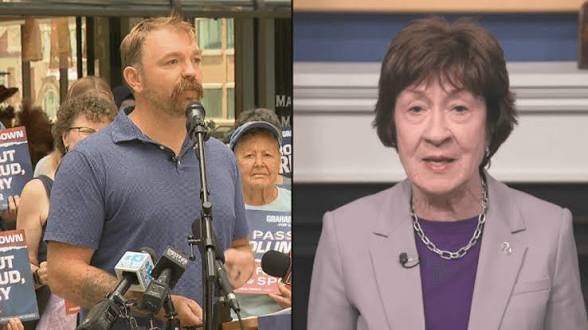
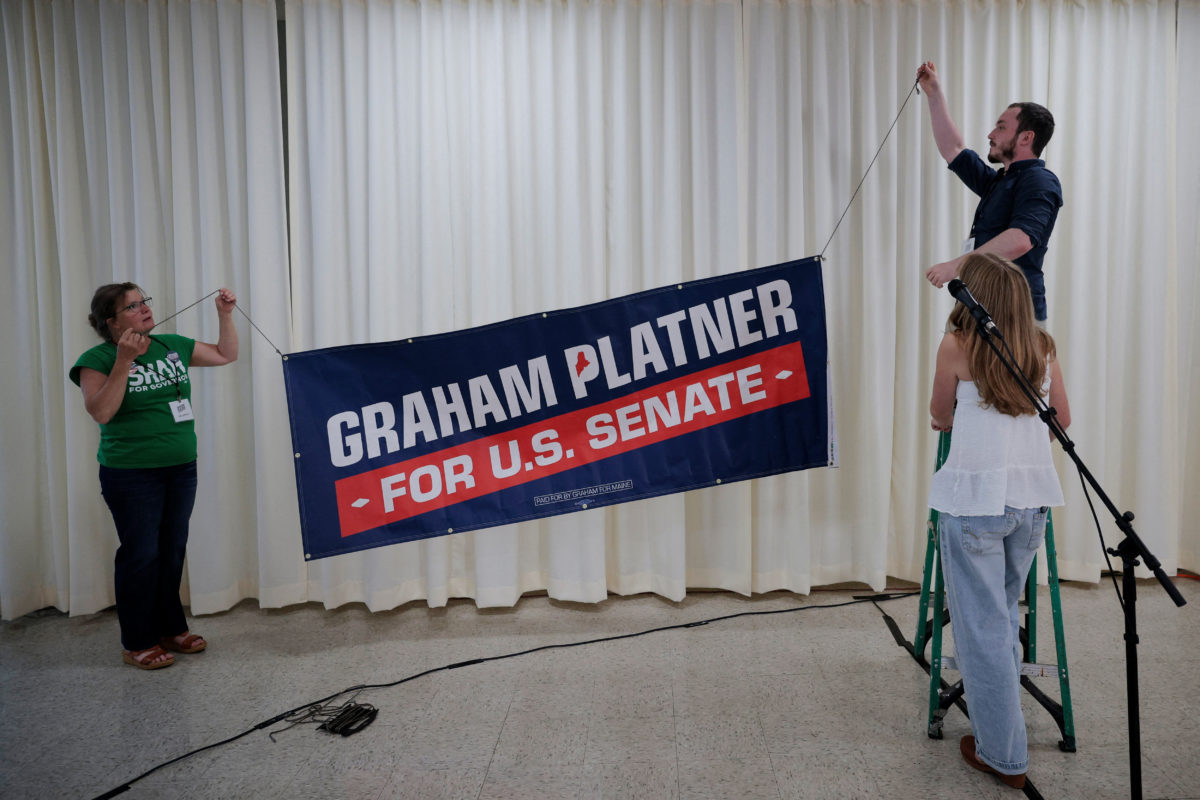
The 2026 Maine Senate race has taken an unexpected turn after Democratic nominee Graham Platner announced he is withdrawing from the contest following weeks of mounting controversy and a serious sexual assault allegation. His decision has dramatically reshaped one of the most closely watched Senate races in the country, where Democrats had hoped to challenge incumbent Republican Senator Susan Collins.
Platner’s campaign had already been under intense scrutiny because of past controversies, including resurfaced social media posts and questions surrounding a tattoo that resembled a Nazi-era symbol. However, the latest allegation proved to be the breaking point, triggering a wave of political fallout and prompting many prominent Democratic leaders to withdraw their support.
His exit now forces Maine Democrats to quickly identify a replacement candidate while preserving their chances in a race that could influence control of the U.S. Senate.
Why Did Graham Platner Withdraw?
Graham Platner announced that he would step aside after a woman publicly accused him of sexually assaulting her during a previous relationship. Platner has categorically denied the allegation, describing it as false, but acknowledged that the controversy had made it impossible for his campaign to continue effectively. (AP News)
In a public statement, Platner argued that the political movement behind his campaign should continue even if he could no longer remain its standard-bearer. He insisted that his withdrawal should not be viewed as an admission of wrongdoing.
Despite his denial, the allegation immediately changed the political landscape, leading to widespread calls from Democratic officials for him to leave the race.
Controversies That Weakened Platner’s Campaign
The assault allegation did not emerge in isolation. Platner’s campaign had faced multiple controversies throughout the election cycle.
Earlier reports highlighted:
- A tattoo resembling a Nazi SS Totenkopf symbol, which Platner said he received while intoxicated and later covered up.
- Offensive historical social media and Reddit posts.
- Criticism over previous personal relationships and campaign management issues.
Although Platner apologized for several past mistakes and maintained that he had changed over time, these controversies continued to shadow his campaign.
Many Democrats initially stood by him despite these issues, believing his grassroots popularity outweighed the political risks. However, the latest allegation fundamentally changed that calculation.
Democratic Leaders Withdraw Support
Within hours of the allegation becoming public, several high-profile Democratic figures distanced themselves from Platner.
Among those withdrawing support were:
- Senator Bernie Sanders
- Representative Ro Khanna
- Other progressive organizations that had previously endorsed his campaign
The loss of endorsements severely weakened his fundraising network and campaign infrastructure.
Party officials increasingly concluded that replacing Platner offered Democrats a stronger chance of remaining competitive against Republican Senator Susan Collins in November.
What Happens Next in Maine?
Maine election law allows the Democratic Party to replace a nominee under certain deadlines.
Following Platner’s withdrawal, the Maine Democratic Party must organize a convention to choose a replacement candidate before the statutory deadline later this month.
Several names have already emerged in political discussions, including:
- Former State Senate President Troy Jackson
- Governor Janet Mills (although no formal indication suggests she plans to enter)
- Other Democratic leaders with statewide experience
The replacement process is expected to move quickly because ballot deadlines leave little room for delay.
Impact on the Maine Senate Race
Before the controversy, Democrats viewed Maine as one of their best pickup opportunities in the 2026 midterm elections.
Susan Collins has remained one of the few Republican senators representing a politically competitive state, making her seat a top Democratic target.
Platner had built a unique campaign that attracted:
- Progressive activists
- Younger voters
- Working-class supporters
- Independent voters dissatisfied with traditional party leadership
However, his withdrawal introduces significant uncertainty.
The Democratic replacement will have limited time to build statewide recognition, organize fundraising, and challenge Collins’ well-established campaign organization.
Political analysts believe the sudden change could strengthen Collins’ reelection prospects, although much will depend on who Democrats nominate next.
Platner Maintains His Innocence
Even while announcing his departure, Platner continued denying the allegation.
He argued that the accusation was false and suggested political forces had moved quickly to abandon his campaign before the facts had been fully examined.
Importantly, no court has determined the truth of the allegation, and the accusation remains contested. Platner has not admitted wrongdoing.
His campaign emphasized that the withdrawal reflected political realities rather than any acceptance of the claims against him.
Reaction Across Maine Politics
The announcement generated immediate reactions from both parties.
Democrats largely focused on preserving their Senate chances by moving toward selecting a new nominee.
Republicans argued that the controversy reflected poor Democratic candidate vetting while expressing confidence that Susan Collins would remain well-positioned heading into the general election.
Meanwhile, many grassroots volunteers who supported Platner expressed disappointment over the campaign’s abrupt end after months of organizing and fundraising.
The coming weeks will determine whether Democrats can unite behind a replacement candidate capable of mounting a competitive statewide campaign.
Why This Race Matters Nationally
The Maine Senate contest carries national significance because control of the U.S. Senate may depend on only a handful of competitive races.
A Democratic victory in Maine would strengthen the party’s efforts to regain or expand Senate influence.
Platner’s withdrawal therefore affects not only Maine politics but also broader national campaign strategies.
Political committees from both parties are expected to closely monitor the Democratic replacement process before making additional investments in the race.
Could Democrats Recover?
Political history shows that replacing a candidate late in an election cycle presents enormous challenges.
A new nominee must rapidly:
- Introduce themselves to voters
- Build campaign infrastructure
- Raise millions in campaign funding
- Unify Democratic factions
- Contrast with Susan Collins
Although difficult, party leaders believe selecting a less controversial candidate could ultimately improve Democratic competitiveness compared with remaining behind Platner.
Whether that strategy succeeds will become clearer once the replacement is officially chosen.
Conclusion
Graham Platner’s withdrawal marks one of the biggest political developments of the 2026 Senate cycle. After months of controversy and following a serious sexual assault allegation that he strongly denies, his campaign came to an abrupt end.
The Democratic Party now faces a race against time to nominate a new candidate capable of challenging Senator Susan Collins in one of America’s most closely watched Senate elections.
As Maine Democrats prepare for their replacement convention, the state’s Senate race enters an entirely new chapter—one that could have lasting implications for both Maine voters and the balance of power in Washington. (AP News)
Read our detailed coverage of Trump Seeks to Block Release of $5.8M Payment to E. Jean Carroll to understand how another high-profile legal battle involving Donald Trump is shaping the national political conversation ahead of the 2026 elections.