
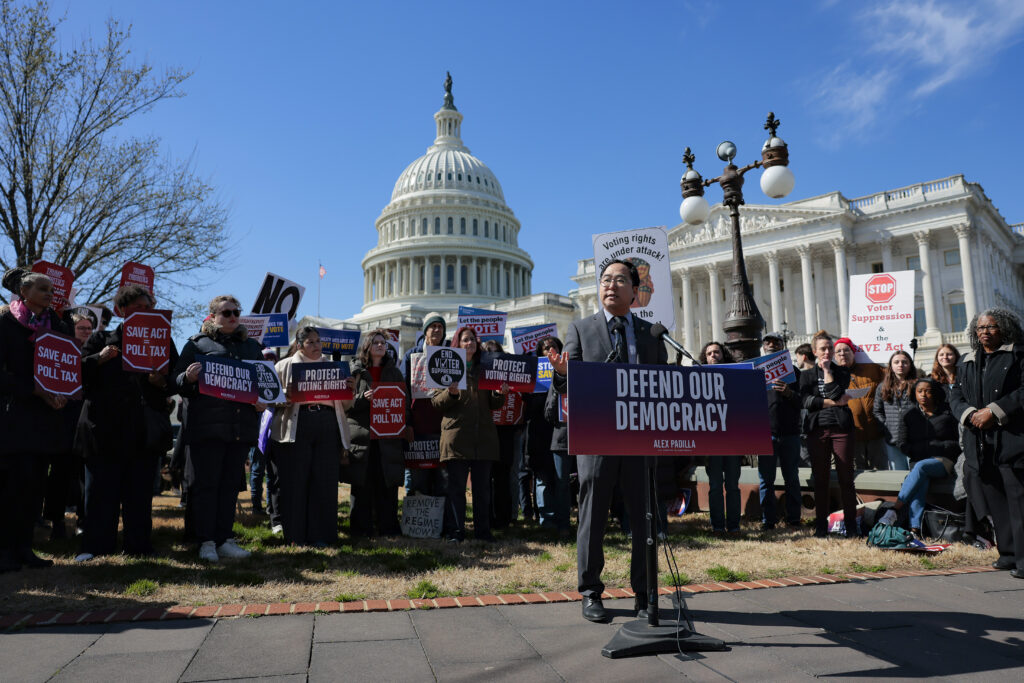
The SAVE America Act (Safeguard American Voter Eligibility Act) has become one of the most debated pieces of legislation in the United States. The bill is designed to strengthen voter eligibility requirements by requiring proof of U.S. citizenship for federal voter registration and implementing stricter voter identification rules. In 2026, the legislation gained national attention when President Donald Trump linked its passage to a major bipartisan housing bill, creating a political showdown in Congress.
What Is the SAVE America Act?
The SAVE America Act, formally known as the Safeguard American Voter Eligibility Act, aims to amend federal election laws by requiring individuals to provide documentary proof of U.S. citizenship before registering to vote in federal elections. The bill also requires voters to present valid photo identification when casting ballots in federal elections.
According to the bill’s summary, acceptable proof of citizenship could include documents such as:
- U.S. passports
- REAL ID-compliant identification showing citizenship
- Other federally approved citizenship documents
The legislation would also require states to take active measures to identify and remove non-citizens from voter registration rolls. Supporters argue these measures would improve election integrity, while critics warn they could create barriers for eligible voters who lack easy access to citizenship documentation.
Why Was the SAVE America Act Introduced?
Supporters of the bill argue that only U.S. citizens should participate in federal elections and that stronger verification systems are needed to prevent voter fraud. Republicans backing the legislation have described it as a critical safeguard for election security.
Opponents, however, contend that documented cases of non-citizen voting are already rare and that additional requirements could make voting more difficult for millions of eligible Americans. Critics have also expressed concerns about the impact on married women whose identification documents may not match their birth certificates and on citizens who do not possess passports.
The Connection to the Congress Housing Bill
The SAVE America Act became a major national story in June 2026 when President Trump announced he would delay signing a bipartisan housing affordability bill until Congress passed the SAVE America Act.
The housing legislation, often referred to as the 21st Century ROAD to Housing Act, was designed to address housing affordability issues across the United States. The bill included provisions intended to:
- Increase housing supply
- Streamline housing development approvals
- Support affordable housing initiatives
- Reduce barriers to construction
- Limit large institutional investors’ control of single-family homes in certain circumstances
The legislation passed Congress with overwhelming bipartisan support, receiving strong backing from both Republicans and Democrats.
Despite the broad support, Trump announced that housing legislation was less important than passing the SAVE America Act and canceled a planned signing ceremony. The move sparked criticism from lawmakers in both parties who argued that housing affordability should remain a priority.
Did the SAVE America Act Pass?
The answer depends on which stage of the legislative process is being discussed.
The SAVE America Act successfully passed the U.S. House of Representatives. Reports indicate the House approved the measure largely along party lines, with most Republicans voting in favor.
However, the legislation has faced significant challenges in the Senate. As of June 2026, the bill had not completed the legislative process necessary to become law. Senate opposition, procedural hurdles, and debates over voting rights have prevented final enactment.
Current Status
- Introduced in Congress ✔️
- Passed the House ✔️
- Senate approval ❌
- Signed into law ❌
Therefore, the SAVE America Act has not become law as of June 2026. (Factually)
Political Impact
The dispute over the SAVE America Act highlights broader divisions in American politics surrounding election security and voting access. Republicans generally view the legislation as necessary to protect election integrity, while Democrats argue that existing safeguards are sufficient and that the proposal risks voter disenfranchisement.
The controversy intensified when Trump used the housing bill as leverage to pressure Senate Republicans into supporting the SAVE America Act. Political analysts described the move as an unusual strategy that linked two unrelated policy areas—housing affordability and election law.
What Happens Next?
The future of the SAVE America Act depends largely on Senate action. If Senate leaders bring the bill to a vote and it receives enough support, it could advance to the president’s desk. If opposition remains strong, the measure may continue to stall despite support from House Republicans and President Trump.
Meanwhile, debate over the housing bill continues as lawmakers push for solutions to rising housing costs and limited housing supply. The outcome of both legislative efforts could play a significant role in shaping political discussions ahead of future elections.
Conclusion
The SAVE America Act is a proposed election reform bill that would require proof of U.S. citizenship for voter registration and stricter voter identification requirements in federal elections. While the legislation has passed the House of Representatives, it has not yet become law because it remains stalled in the Senate. The bill gained additional attention after President Trump delayed signing a major bipartisan housing bill in an effort to pressure Congress into passing the SAVE America Act. As debates over voting rights, election security, and housing affordability continue, the legislation remains one of the most closely watched issues in Washington.