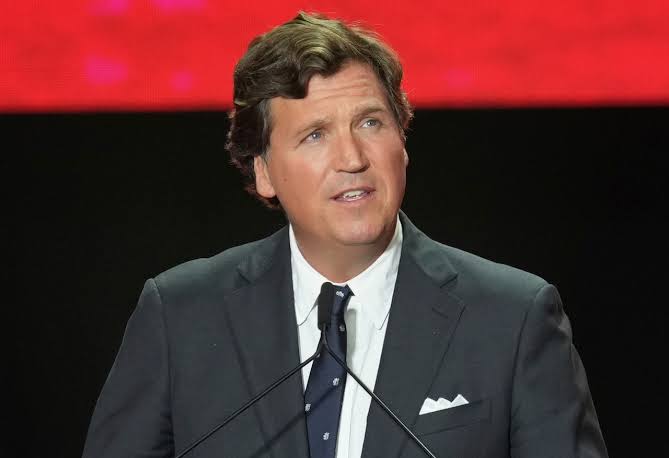
Tucker Carlson, one of the most influential conservative media personalities in the United States, has recently made headlines after publicly stating that he will no longer support the Republican Party. The announcement has triggered widespread debate across political circles, raising questions about internal divisions within the GOP and the future of right-wing politics in America.
Carlson’s statement did not just create shockwaves among supporters—it also reignited discussions about ideological fractures within the Republican Party, especially as the country heads toward the 2026 political cycle.
Tucker Carlson’s Break from the Republican Party
In a recent podcast appearance, Tucker Carlson declared that there is “no chance” he would support the Republican Party moving forward. At the same time, he also made it clear that he does not intend to align with the Democratic Party either, leaving his political future uncertain.
According to Carlson, his decision comes after growing frustration with the direction of the GOP and its policy decisions. He has criticized the party for failing to represent what he describes as the interests of American citizens, particularly in relation to foreign policy decisions and elite political influence.
This marks a significant shift for Carlson, who spent decades as a prominent conservative voice and was previously one of the strongest media supporters of Republican leadership and Donald Trump’s political movement.
Tucker Carlson Republican Party Split Explained
The phrase “tucker carlson republican party split” has been trending due to the growing perception that his departure reflects deeper tensions within the GOP.
Political analysts suggest that Carlson’s exit is not just a personal decision, but part of a broader ideological conflict inside the Republican Party. Over the past several years, the GOP has experienced internal disagreements over foreign policy, economic strategy, and the direction of its populist wing.
Carlson’s criticism has focused heavily on what he sees as disconnect between party leadership and grassroots voters. He has argued that decisions are increasingly influenced by donors, corporate interests, and foreign policy alliances rather than domestic concerns.
This messaging has resonated with certain segments of conservative voters who already feel alienated by establishment politics.
Tucker Carlson Says He Will No Longer Support the Republican Party
One of the most widely shared quotes from Carlson’s recent comments is his declaration that he will no longer support the Republican Party. This statement has fueled intense media coverage and political commentary.
Carlson reportedly stated that his long-standing loyalty to the GOP has ended, emphasizing that he sees no path forward within the current party structure. However, he also avoided endorsing any alternative political party.
His remarks suggest a broader sentiment of political disillusionment rather than a shift toward another established political identity.
The reaction has been divided:
- Some conservatives see Carlson’s exit as a warning sign for the GOP.
- Others believe it reflects internal disagreements that have been building for years.
- Critics argue that his stance highlights growing polarization in American politics.
Tucker Carlson Leaving Republican Party: Reactions and Impact
The idea of “tucker carlson leaving republican party” has sparked strong reactions across the political spectrum.
Within conservative media, responses range from dismissal to concern. Some commentators believe Carlson’s influence remains strong enough to impact voter sentiment, especially among populist conservatives who distrust traditional party leadership.
Others argue that his departure may have limited structural impact but significant symbolic importance. As a media figure with a large following, Carlson’s statements often shape political narratives, even if they do not directly translate into electoral outcomes.
Outside conservative circles, his announcement has been interpreted as evidence of increasing fragmentation in U.S. politics. Analysts note that both major parties are experiencing internal ideological tension, though it manifests differently in each.
Republican Party Split and Internal Divisions
The Republican Party has faced ongoing debates about identity, leadership, and policy direction. Carlson’s announcement adds another layer to these existing divisions.
Key areas of tension include:
1. Foreign Policy Direction
Disagreements over military involvement and international alliances have created friction within the party, especially among populist and traditional conservative factions.
2. Populism vs Establishment Politics
A growing divide exists between grassroots populist voices and establishment Republican leadership tied to long-term institutional politics.
3. Media Influence
Conservative media personalities like Carlson have played a major role in shaping public opinion, sometimes independently of official party messaging.
These divisions contribute to the perception of a “republican party split,” even if the party remains formally unified.
What This Means for Future Elections
As the U.S. approaches upcoming elections, including the 2026 midterms, Carlson’s political stance could influence voter behavior, especially among undecided or independent conservative voters.
While it is unclear whether his position will lead to a broader shift, analysts agree that his statements reflect a growing uncertainty within American political alignment.
Some political observers believe this could open space for new political movements or third-party alternatives, though such outcomes remain speculative.
Conclusion
Tucker Carlson’s statement that he will no longer support the Republican Party represents more than just a personal political decision—it highlights deeper ideological tensions within the GOP and broader American political landscape.
Whether this marks the beginning of a larger political realignment or simply another moment of internal party conflict remains to be seen. What is clear, however, is that Carlson’s influence ensures that his departure from Republican support will remain a major talking point in U.S. politics for the foreseeable future.