The US-Iran conflict has entered one of its most dangerous phases in recent years, with growing fears that a renewed naval blockade could dramatically reshape security and commerce across the Middle East. Rising military activity in and around the Strait of Hormuz, combined with escalating political rhetoric from Washington and Tehran, has fueled concerns about regional stability, global oil supplies, and the possibility of a wider conflict.
Recent developments suggest that the United States is preparing to intensify maritime pressure on Iran following continued disputes over shipping security and Iran’s regional military activities. Meanwhile, Iranian officials have warned that any attempt to restrict their maritime access would be viewed as a hostile act, increasing the risk of direct military confrontation.
Why the Strait of Hormuz Matters
The Strait of Hormuz is among the world’s most strategically important waterways. Located between Iran and Oman, the narrow passage connects the Persian Gulf to the Gulf of Oman and the Arabian Sea.
Nearly one-fifth of global oil shipments move through this chokepoint, making it vital for international energy markets. Countries including Saudi Arabia, the United Arab Emirates, Kuwait, Iraq, and Qatar depend heavily on this route for exporting crude oil and liquefied natural gas.
Any disruption—whether through military conflict, blockades, or attacks on commercial vessels—can immediately trigger higher energy prices and increased shipping costs worldwide. Analysts warn that even the threat of military action is enough to unsettle financial markets.
Naval Blockade Threat Raises Regional Tensions
Washington has signaled that tougher maritime enforcement measures remain on the table after accusing Iran of threatening commercial shipping and regional security. Reports indicate that U.S. officials are considering expanded naval operations targeting vessels linked to Iranian ports while maintaining freedom of navigation for international shipping.
Iran has responded by insisting it will defend its territorial waters and reject any foreign attempts to interfere with its maritime activities. Iranian military officials have repeatedly warned that additional U.S. naval deployments could provoke retaliation.
Military analysts believe that even limited encounters between American warships and Iran’s Islamic Revolutionary Guard Corps (IRGC) naval forces could rapidly escalate into a broader confrontation.
Military Build-Up Across the Gulf
Both countries have significantly increased their military readiness.
The United States has strengthened its naval presence with destroyers, surveillance aircraft, and additional regional assets designed to protect commercial shipping lanes and deter Iranian attacks.
Iran, meanwhile, continues to rely on asymmetric naval tactics that include:
- Fast attack boats
- Coastal missile batteries
- Naval mines
- Armed drones
- Anti-ship missile systems
Defense experts say these capabilities allow Iran to threaten shipping without engaging in traditional naval warfare, making the Strait of Hormuz particularly difficult to secure completely.
Impact on Global Oil Markets
Energy markets have reacted quickly to renewed tensions.
Oil prices have climbed sharply amid fears that maritime disruptions could reduce global crude supplies. Traders are pricing in additional geopolitical risk, especially if commercial shipping becomes more dangerous or insurance costs continue rising.
Brent crude and U.S. benchmark prices have both moved higher as investors monitor developments in the Gulf. Analysts say prolonged instability could lead to sustained increases in fuel prices worldwide.
Major importers across Asia and Europe remain especially vulnerable because many rely heavily on Gulf energy exports.
Shipping Industry Faces Growing Risks
Commercial shipping companies are closely monitoring the situation.
Several maritime organizations have advised vessels operating near the Strait of Hormuz to exercise extreme caution. Tanker operators may alter routes, increase security measures, or delay shipments if military activity intensifies.
Shipping insurers have also begun reassessing risk premiums, potentially increasing transportation costs for oil and other cargo moving through the region.
Industry experts note that prolonged instability would not only affect oil but also global trade in chemicals, consumer goods, and industrial materials.
Diplomatic Efforts Continue
Despite rising military tensions, diplomatic channels remain active.
Regional mediators, including Gulf nations and international partners, continue encouraging both Washington and Tehran to avoid further escalation. Calls for renewed negotiations focus on maritime security, regional stability, and preventing accidental military clashes.
International organizations have also urged restraint, warning that any conflict affecting the Strait of Hormuz could have severe humanitarian and economic consequences beyond the Middle East.
Economic Consequences Beyond Energy
The economic effects extend well beyond oil prices.
A prolonged maritime crisis could:
- Increase inflation globally
- Raise transportation and shipping costs
- Disrupt supply chains
- Slow international trade
- Affect airline fuel expenses
- Increase manufacturing costs
Financial markets generally react negatively to geopolitical instability in the Gulf because uncertainty affects investor confidence and global economic growth.
Many economists believe that prolonged disruptions would impact both developed and emerging economies.
Political Pressure in Washington
The escalating conflict also carries domestic political implications for the United States.
Recent polling indicates many Americans expect the confrontation with Iran to continue rather than end quickly. Concerns over rising gasoline prices and the broader economic impact have become increasingly important political issues as policymakers debate future military strategy.
Lawmakers remain divided between those supporting stronger military pressure and those urging renewed diplomatic engagement.
Iran’s Strategic Position
For Iran, maintaining influence over the Strait of Hormuz remains a critical national security objective.
Tehran has long viewed its control over nearby waters as a strategic deterrent against foreign military pressure. Iranian officials argue that their naval posture is defensive, while Western governments accuse Iran of threatening international navigation and destabilizing regional security.
This difference in interpretation continues to complicate diplomatic efforts.
What Happens Next?
Several possible scenarios could unfold in the coming weeks:
Limited Maritime Confrontations: Naval encounters remain contained without expanding into broader warfare.
Expanded Naval Blockade: The United States increases enforcement against Iranian-linked shipping while attempting to keep international trade moving.
Diplomatic Breakthrough: Regional mediators succeed in reducing tensions through negotiations.
Broader Regional Conflict: Miscalculation or military escalation draws additional Middle Eastern countries into the crisis.
Most security experts believe both sides understand the enormous economic and military costs of a full-scale war. However, the risk of unintended escalation remains significant.
Conclusion
The US-Iran conflict has entered a critical stage as the threat of a renewed naval blockade raises fresh concerns about Middle East stability and global energy security. The Strait of Hormuz remains the center of the confrontation, with military deployments, diplomatic negotiations, and economic pressures all converging in one of the world’s most important maritime corridors.
While diplomatic efforts continue, uncertainty persists. Any escalation between Washington and Tehran could affect global oil prices, international shipping, and financial markets, making this one of the most closely watched geopolitical crises of 2026. (AP News)
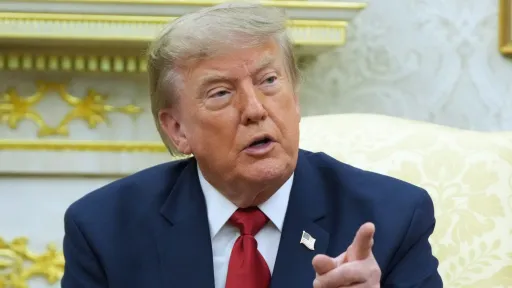
As tensions between Washington and Tehran continue to intensify, Trump’s latest warning about a potential naval blockade follows his earlier pledge to target Iran’s fortified nuclear infrastructure. Read our full coverage: Trump Says US Will ‘Take Out’ Iran’s Pickaxe Mountain Nuclear Facility: What We Know.