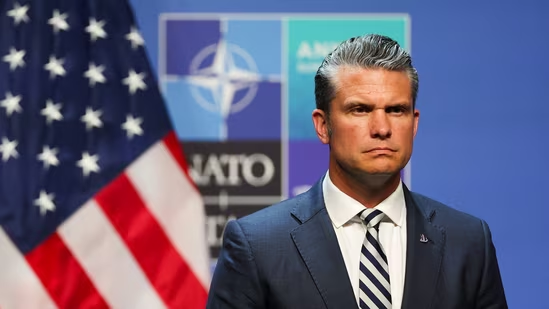
A routine visit by U.S. Defense Secretary Pete Hegseth to a Navy vessel unexpectedly shifted attention away from military operations and toward a longstanding issue inside the armed forces—grooming standards. Instead of headlines focusing on readiness or strategy, reports centered on several sailors wearing beards despite Hegseth’s push for stricter enforcement of military appearance rules.
The incident has reignited debate over whether facial hair regulations are simply about appearance or whether they play a larger role in military discipline, safety, and professionalism. It has also prompted fresh questions from Americans asking: What is Pete Hegseth’s military grooming policy?
Here’s everything you need to know about the policy, why it matters, and why the Navy visit became a talking point across Washington.
Why Did Pete Hegseth’s Navy Visit Make Headlines?
Pete Hegseth recently toured a U.S. Navy ship during a period of heightened military activity. While meeting sailors and inspecting operations, reports indicated that he noticed several service members wearing beards that appeared inconsistent with military grooming standards.
According to multiple reports, the Defense Secretary expressed frustration that existing grooming rules were not being consistently enforced. The incident reportedly triggered renewed discussions within the Pentagon about accelerating compliance across all military branches.
The visit quickly became symbolic of Hegseth’s broader campaign to restore what he considers stricter military discipline.
What Is Pete Hegseth’s Military Grooming Policy?
Pete Hegseth has consistently argued that military professionalism begins with maintaining uniform standards. His grooming policy emphasizes:
- Clean-shaven faces for most active-duty personnel.
- Limited exceptions for approved medical conditions.
- Religious accommodations considered under existing federal and military regulations.
- Neatly trimmed mustaches that comply with service regulations.
- Strict enforcement by commanders instead of inconsistent local interpretation.
The Pentagon’s approach reflects Hegseth’s belief that appearance standards contribute to discipline, readiness, and accountability throughout the armed forces.
Why Does the Military Restrict Beards?
The U.S. military has historically limited facial hair for several reasons.
1. Protective Equipment
One of the primary reasons involves safety. Respirators and gas masks require a tight facial seal to function properly. Thick facial hair can reduce their effectiveness during chemical or biological emergencies.
2. Uniform Appearance
Military organizations emphasize consistency. Uniform grooming standards reinforce equality among personnel regardless of rank or assignment.
3. Discipline
Supporters argue that following small regulations demonstrates a willingness to comply with larger operational requirements.
4. Professional Image
Military leaders frequently say service members represent the United States at home and abroad. Standardized grooming projects professionalism and organizational discipline.
Are Beards Ever Allowed?
Yes.
The military recognizes limited exceptions.
Medical Waivers
Some personnel suffer from skin conditions such as pseudofolliculitis barbae, making daily shaving medically difficult. These individuals may receive temporary shaving waivers after evaluation.
However, recent policy changes reportedly require sailors receiving long-term medical waivers to undergo treatment, and those unable to meet standards after extended periods could face administrative consequences.
Religious Accommodations
Federal law also protects sincerely held religious beliefs.
Members of faiths such as Sikhism or certain Muslim communities may receive permission to maintain beards if approved through established accommodation procedures.
These exemptions continue to exist even as the Pentagon tightens general grooming enforcement.
Why Is Hegseth Focusing So Much on Grooming?
Pete Hegseth has repeatedly linked military standards with combat effectiveness.
Since becoming Defense Secretary, he has emphasized:
- Higher physical fitness expectations
- Stronger accountability
- Traditional military culture
- Uniform enforcement of regulations
- Reduced administrative exceptions
Supporters argue these measures rebuild military professionalism after years of inconsistent enforcement.
Critics, however, believe excessive focus on grooming diverts attention from larger readiness challenges, recruitment, and modernization.
The Debate Over Medical Shaving Waivers
One of the most controversial aspects of the current policy concerns medical shaving waivers.
Military officials have reportedly moved toward stricter oversight of personnel who remain unable to shave after lengthy medical treatment.
Supporters argue:
- Long-term waivers reduce consistency.
- Protective equipment requirements remain important.
- Equal standards should apply whenever operationally possible.
Critics respond:
- Certain skin conditions disproportionately affect some populations.
- Existing medical waivers already balance readiness and health.
- Administrative separation may unnecessarily affect experienced service members.
The debate continues across military and veteran communities.
Why Did Bearded Sailors Overshadow the Navy Visit?
The Navy visit became newsworthy because it highlighted a gap between Pentagon policy and day-to-day enforcement.
Observers noted that while Hegseth has publicly championed stricter grooming rules, multiple sailors reportedly appeared with facial hair during his visit.
The images quickly circulated online and prompted renewed discussion about:
- Whether commanders are fully enforcing regulations.
- How quickly new Pentagon directives are being implemented.
- Whether current waiver systems are too broad.
- The practical challenges of applying uniform standards across thousands of service members.
Instead of focusing solely on naval operations, media coverage largely centered on grooming enforcement.
Supporters vs. Critics
Supporters Say
Supporters of Hegseth’s approach argue:
- Discipline starts with small details.
- Military standards should never become optional.
- Uniform appearance improves unit cohesion.
- Strong leadership requires consistent enforcement.
Critics Say
Opponents believe:
- Grooming receives disproportionate attention.
- Operational readiness matters more than appearance.
- Medical and religious accommodations deserve greater flexibility.
- Recruitment challenges should receive higher priority.
The disagreement reflects a broader conversation about military culture and leadership.
Could More Changes Be Coming?
Reports suggest Pentagon leadership continues reviewing grooming enforcement and related policies.
Future changes could include:
- More consistent inspections.
- Faster implementation across military branches.
- Additional guidance for commanders.
- Revised medical waiver procedures.
- Stronger compliance reporting.
While no sweeping new beard ban has been announced beyond existing standards, recent developments indicate that enforcement—not necessarily the rules themselves—remains the Pentagon’s primary focus. (kgw.com)
Final Thoughts
The question, “What is Pete Hegseth’s military grooming policy?”, has become one of the most discussed military leadership topics following his recent Navy visit.
At its core, the policy emphasizes clean-shaven service members, limited medical and religious exceptions, and stricter enforcement of long-standing military appearance standards. Hegseth argues these measures reinforce discipline, readiness, and professionalism, while critics question whether grooming should receive such significant attention amid broader defense priorities.
The bearded sailors seen during his Navy inspection transformed what was expected to be a routine visit into a national conversation about military culture, leadership expectations, and how regulations are enforced across America’s armed forces.
Also Read: Iran Calls Strait of Hormuz Ship Attacks a ‘Mistake,’ Reaffirms Safe Shipping After Oman Talks — Learn how Tehran’s latest diplomatic message could affect regional security and global shipping routes.