
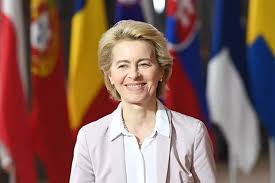
Azerbaijan has become one of the world’s most strategically important countries thanks to its location, abundant energy resources, and growing role in regional diplomacy. Situated between Eastern Europe and Western Asia, Azerbaijan serves as a vital bridge connecting Europe, the Caucasus, Central Asia, and the Middle East. In recent years, the country has gained increasing international attention due to its natural gas exports, transportation corridors, and closer cooperation with the European Union under European Commission President Von der Leyen.
As Europe continues reducing its dependence on Russian energy, Azerbaijan has emerged as a key partner in ensuring energy security. At the same time, the country remains influential in regional politics, infrastructure development, and international trade.
Where Is Azerbaijan?
Azerbaijan is located in the South Caucasus region, bordered by Russia, Georgia, Armenia, Iran, and the Caspian Sea. Its capital city, Baku, sits on the Caspian coast and serves as the country’s political, economic, and cultural center.
With a population of approximately 10 million people, Azerbaijan combines modern urban development with centuries-old cultural traditions influenced by Turkic, Persian, Russian, and European civilizations.
A Brief History
Azerbaijan declared independence following the collapse of the Soviet Union in 1991. Since then, the country has transformed into one of the leading economies in the South Caucasus.
Its economic development has largely been driven by oil and natural gas production from the Caspian Sea. Revenue from energy exports has funded infrastructure projects, modernization programs, and international investments.
However, Azerbaijan’s modern history has also been shaped by disputes over the Nagorno-Karabakh region, making regional security one of its major political priorities.
Azerbaijan’s Economy
The Azerbaijani economy is heavily supported by:
- Oil exports
- Natural gas production
- Petrochemicals
- Transportation and logistics
- Agriculture
- Tourism
The country’s strategic location makes it an important transit hub connecting Asia and Europe through the Middle Corridor, an increasingly important trade route that bypasses Russia.
Government initiatives have also focused on diversifying the economy by investing in renewable energy, technology, agriculture, and digital infrastructure.
Azerbaijan’s Importance to Europe
Following Europe’s efforts to reduce reliance on Russian energy, Azerbaijan has become one of the European Union’s most valuable external energy partners.
Natural gas reaches European markets through the Southern Gas Corridor, a major pipeline network connecting Azerbaijan to Southern Europe.
Gas exports to Europe have increased significantly since 2021, making Azerbaijan an increasingly important contributor to European energy diversification.
Von der Leyen and Azerbaijan
One of the most notable developments in EU-Azerbaijan relations has been the close cooperation between Azerbaijan and European Commission President Ursula Von der Leyen.
In July 2022, Von der Leyen visited Baku to sign a strategic energy partnership aimed at strengthening gas supplies from Azerbaijan to European countries. The agreement became an important pillar of the EU’s broader energy security strategy after Russia’s invasion of Ukraine.
Since then, both sides have continued expanding cooperation beyond natural gas into:
- Renewable energy
- Green hydrogen
- Electricity interconnections
- Methane emission reductions
- Energy efficiency
EU officials describe Azerbaijan as an important strategic energy partner while also encouraging investments in clean energy projects.
Recent Cooperation Between Azerbaijan and Von der Leyen
Relations continue to develop in 2026. The European Union recently announced that Von der Leyen will visit both Armenia and Azerbaijan as part of broader regional engagement and support for stability in the South Caucasus.
Earlier high-level meetings between Azerbaijani President Ilham Aliyev and EU leaders also emphasized cooperation in:
- Energy security
- Transportation corridors
- Regional peace
- Economic investment
- Infrastructure development
These discussions demonstrate Azerbaijan’s growing geopolitical importance for Europe.
Energy Exports Remain Azerbaijan’s Biggest Strength
Azerbaijan possesses large reserves of:
- Natural gas
- Crude oil
- Offshore energy resources
The country’s state energy company SOCAR remains one of the largest energy producers in the region.
Today, Azerbaijani gas reaches several European countries through pipelines crossing Georgia, Turkey, Greece, Albania, and Italy.
European policymakers increasingly view Azerbaijan as an important component of long-term energy diversification while balancing climate goals with energy security.
Transportation and the Middle Corridor
Beyond energy, Azerbaijan plays a critical role in international logistics.
The country forms part of the Middle Corridor, connecting China and Central Asia with Europe via:
- Kazakhstan
- Caspian Sea
- Azerbaijan
- Georgia
- Turkey
- European markets
As global trade routes evolve, Azerbaijan has invested heavily in ports, railways, highways, and logistics centers to strengthen its position as a regional transport hub.
European leaders have highlighted Azerbaijan’s role in improving connectivity between Europe and Central Asia.
Tourism in Azerbaijan
Tourism has become another important sector of the Azerbaijani economy.
Popular destinations include:
- Baku Old City
- Flame Towers
- Gobustan National Park
- Sheki
- Gabala
- Caspian Sea coastline
Visitors experience a blend of modern architecture, medieval history, mountain landscapes, and rich culinary traditions.
International sporting events and cultural festivals have further boosted Azerbaijan’s global profile.
Challenges Facing Azerbaijan
Despite economic progress, Azerbaijan continues to face several challenges:
Regional Security
Relations with Armenia remain sensitive despite ongoing diplomatic efforts toward normalization.
Human Rights Concerns
International organizations have raised concerns regarding political freedoms, media independence, and civil liberties.
Economic Diversification
Reducing dependence on hydrocarbons remains a long-term objective as global energy markets shift toward renewable energy.
Climate Transition
While Azerbaijan continues expanding gas exports, it is also investing in renewable energy projects to prepare for the future energy transition.
Azerbaijan’s Future Outlook
Azerbaijan is expected to remain a strategically important nation over the coming decade.
Its future growth will likely depend on:
- Expanding renewable energy production
- Increasing natural gas exports where demand persists
- Developing transport infrastructure
- Strengthening international trade partnerships
- Promoting regional stability
- Attracting foreign investment
As Europe pursues a balanced approach to energy security and decarbonization, Azerbaijan’s cooperation with the European Union is likely to remain significant.
Conclusion
Azerbaijan has evolved into far more than an oil-producing nation. Its strategic location, energy resources, expanding transport networks, and growing diplomatic engagement have made it a key player in Eurasian geopolitics.
The partnership between Azerbaijan and Von der Leyen reflects Europe’s effort to strengthen energy security while building broader cooperation in renewable energy, trade, and regional connectivity. Although challenges remain—including regional tensions and economic diversification—the country’s strategic importance continues to grow.
For businesses, investors, policymakers, and travelers alike, Azerbaijan is increasingly becoming one of the most influential countries connecting Europe and Asia in the twenty-first century.